1. The pause at the bottom of the stairs
It isn't refusal. It's a calculation. Senior dogs lose muscle mass in their hindquarters first, and the staircase becomes a small mountain. A non-slip runner, a ramp for the couch, and a vet conversation about joint support can buy a lot of dignity.
2. Sleeping deeper, waking slower
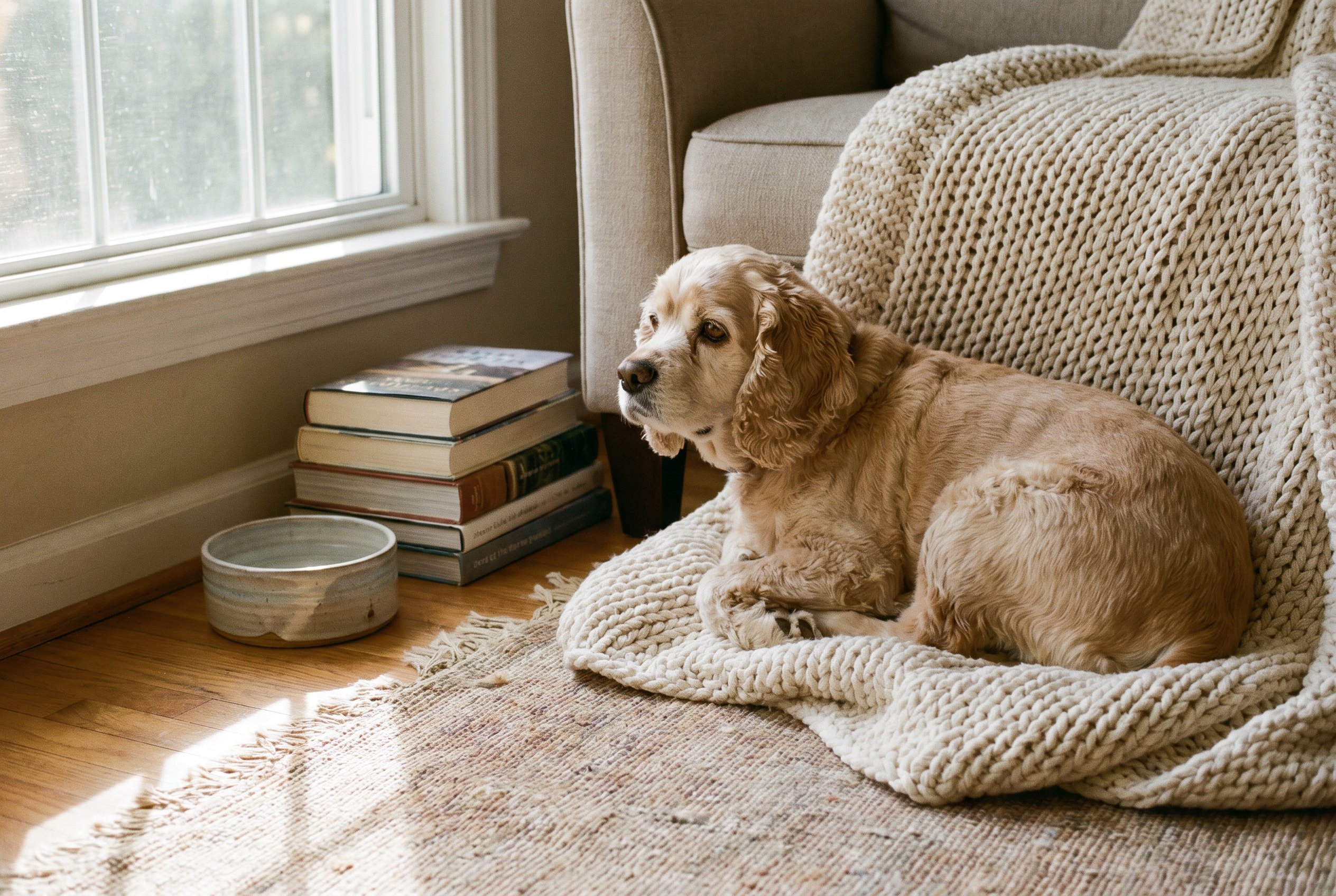
He used to spring up the moment the leash came out. Now there's a beat. That beat is normal, and it's also a quiet invitation to slow down with him. Shorter, more frequent walks beat long ones.
3. The cloudy eyes that aren't cataracts
Most senior dogs develop a bluish haze called nuclear sclerosis. It looks dramatic and usually isn't. Cataracts are different and warrant a vet visit. If you're not sure, photograph the eye in natural light and ask.
4. The new picky eating
Senses dull. Warm the food slightly. Add a tablespoon of plain bone broth. Switch to a softer kibble. If she stops eating altogether for more than a day, call.
5. The quiet anxiety in new places
Older dogs become more sensitive to change. The boarding kennel that used to be fine is now a little harder. Consider in-home pet sitting if you can.
6. The lump you keep meaning to ask about
Most lumps in older dogs are benign fatty tumors. Some are not. Don't sit on it. A simple needle aspirate at the vet takes ten minutes and removes the question.
7. The look that lasts a beat too long
This one is harder to write. Senior dogs sometimes look at you a moment longer than they used to. It is not a goodbye. It is a thank-you. Notice it. Sit with it. Take the picture.
Loving an aging dog is one of the great privileges of a life. Slow down with him. Buy the ramp. Warm the food. Take the photo. He's still here.